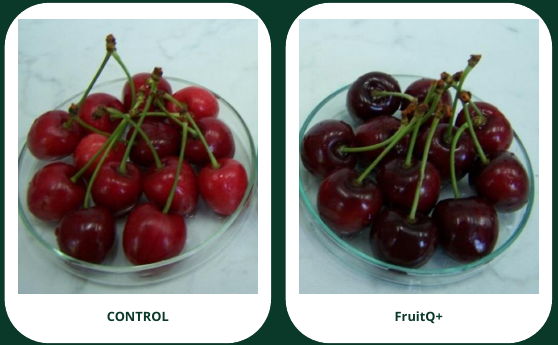
Cherry · Türkiye
+25% Weight · +40% Color
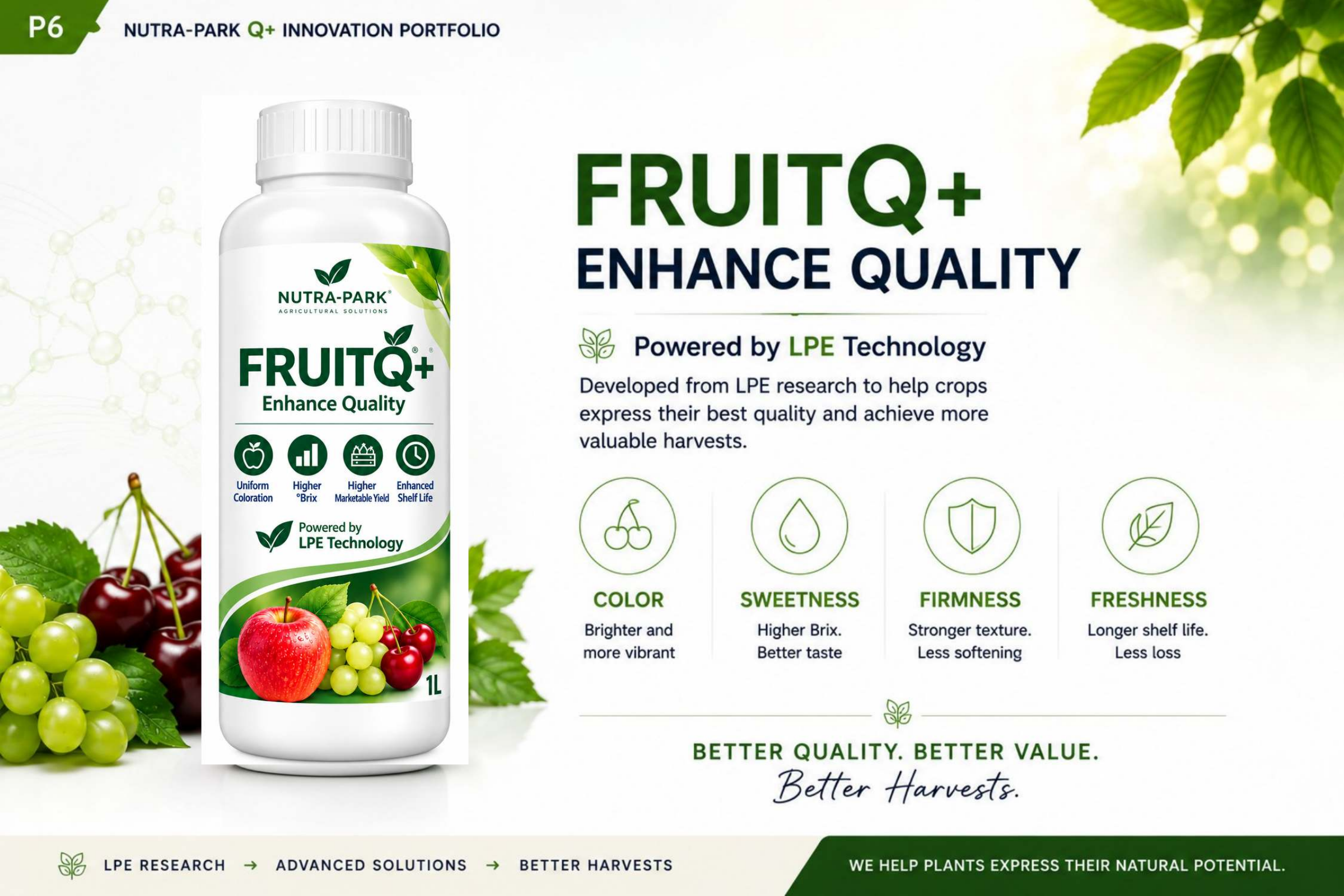
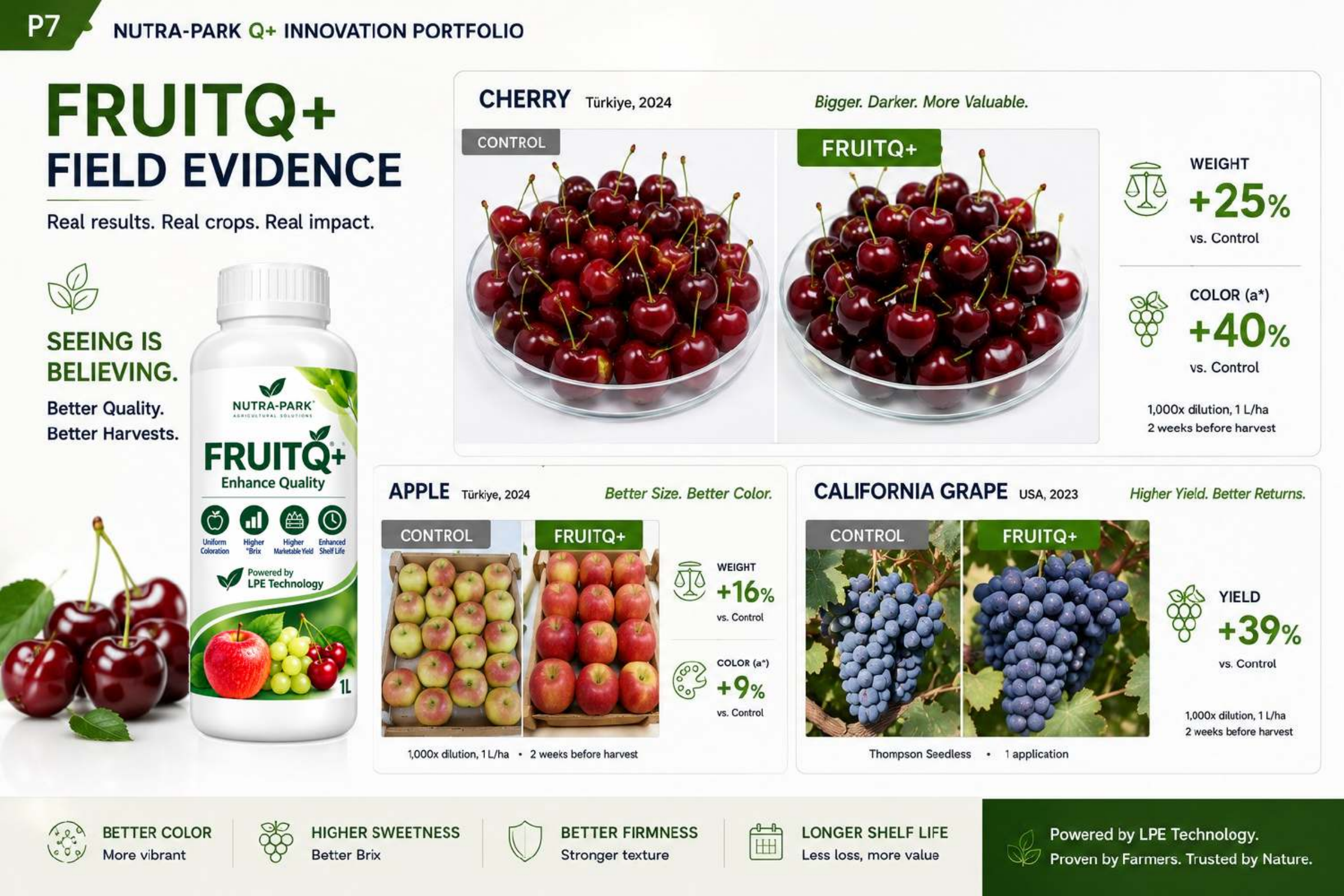
FruitQ+ is Nutra-Park’s core fruit-quality solution, developed from LPE research to support quality expression during fruit maturation and help preserve marketable quality through harvest and handling.
Supports visible and more uniform color expression as fruit naturally matures.
Supports soluble-solids development and eating quality in responsive crops.
Supports firmness retention and post-harvest quality.
Better quality can translate into more fruit reaching a valuable marketable grade.
LPE (lysophosphatidylethanolamine) is a lysophospholipid associated with plant cell membranes. Nutra-Park’s FruitQ+ platform grew from research on how LPE can influence ripening-related physiology, membrane stability and quality retention.
Color and sugar development are evaluated in relation to crop, stage and treatment timing.
Research on LPE includes phospholipase-D-related membrane processes associated with senescence.
Fruit softening and cell-wall-related quality are part of the FruitQ+ technical evidence base.
Responses can vary by crop, tissue, developmental stage and application program.
Mechanistic statements are presented as a technical framework; field response depends on crop and physiological stage. See Science Library for research and source documents.
The brochure highlights representative results. The FruitQ+ technical archive extends that story with additional trials accumulated over years of field work.
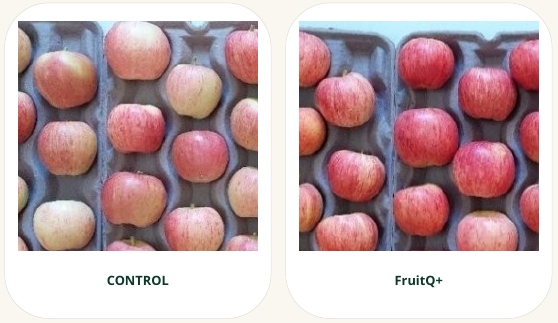
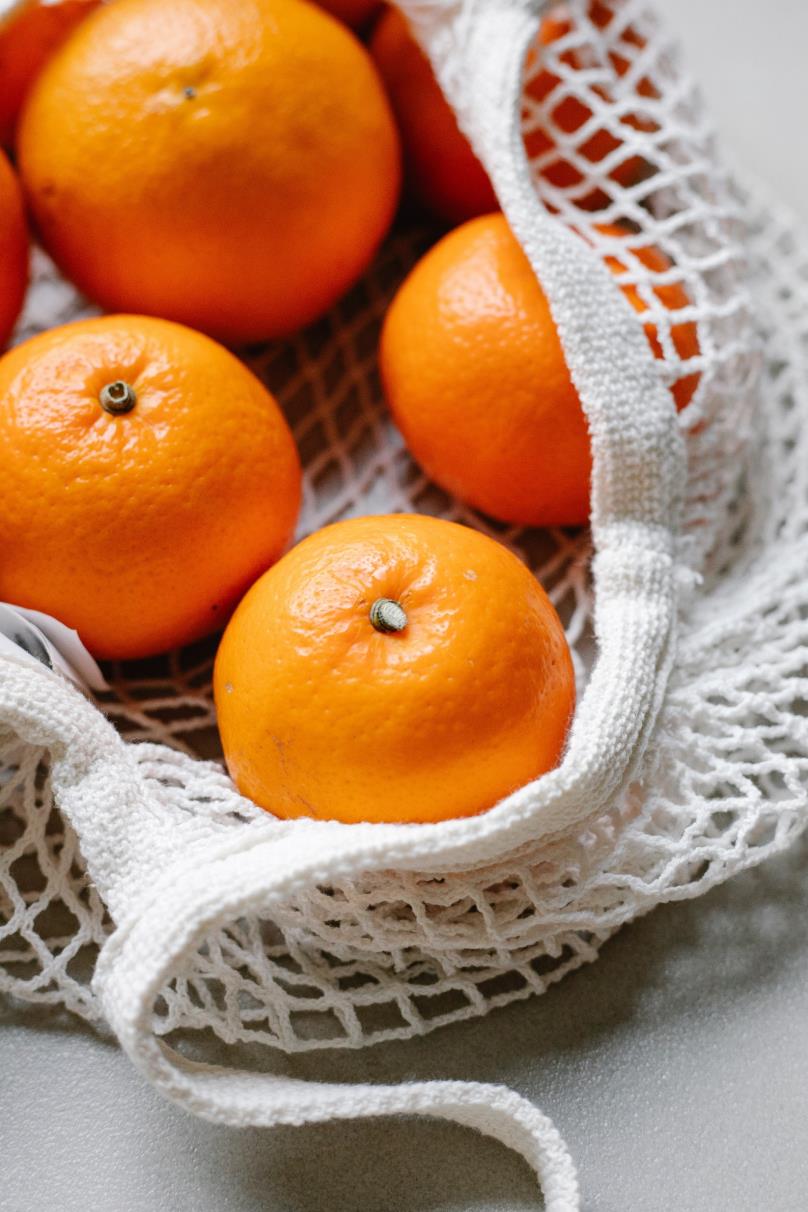
FruitQ+ has been evaluated across fruit and vegetable crops. Apple, cherry and grape are presented first as detailed crop stories because Nutra-Park has both representative field evidence and historical application records for these crops.
Color initiation / light-red stage, with repeat treatment as fruit advances.
End of stone hardening / straw color through onset of blush.
Veraison and active natural color development.
Pre-harvest maturation and sugar-accumulation window.
Mature-green to breaker / turning stage; repeated harvest systems may require cohort-based timing.
Breaker / early color stage, aligned with harvest cycle.
Begin around king-fruit blush and repeat according to fruit load and harvest rhythm.
Historical records include additional fruit and specialty crops in the FruitQ+ archive.
Apple is one of the strongest FruitQ+ crop stories because current representative evidence and older technical guides point to a similar late-season quality window.
| Protocol | Tested program |
|---|---|
| Dilution | 500 : 1 |
| Timing | 4 & 2 weeks before harvest |
Source: Nutra-Park 2026 brochure / Argentina INTA report record. Historical Apple fact sheets also retain coloration, first-harvest marketable-yield, firmness and packout evidence.
Older Apple guidance places color applications around the beginning of natural color development, using light-red / 10–20% color as a practical visual cue.
Working 2026 framework: 200 ml/100 L · two applications around 4 & 2 WBH, aligned with natural color development.
Cherry combines a strong visual response with measurable weight and color data. The archive also contains firmness, cracking and A-grade fruit records.
| Protocol | Tested program |
|---|---|
| Dilution | 1,000 : 1 |
| Timing | 4 & 2 weeks before harvest |
The historical archive also includes one-application and two-application Cherry guides. Those records are preserved as tested rather than merged into one claim.
Cherry development moves through cell division, pit hardening and rapid fruit bulking before harvest. Newer technical work uses end of stone hardening / straw color and beginning of color change as a useful physiological anchor.
Important: modern-trial rate QA is still being completed, so current commercial rate should remain separate from the historical protocols shown in the archive.
Grape has one of the longest FruitQ+ evidence histories, including yield, color, °Brix, berry size and firmness records across varieties and regions.
| Protocol | Tested program |
|---|---|
| Dilution | 1,000 : 1 |
| Timing | 4 & 2 weeks before harvest |
Historical Grape records also include Crimson, Red Globe and Flame material, plus source graphs for sugar, size and firmness.
For color-oriented grape programs, older FruitQ+ guides use natural color development as the key trigger: approximately 20% color for an earlier treatment and around 50% color for a later treatment.
Evidence range: historical programs include both 500× and 1,000× protocols. The website therefore preserves tested protocols separately from the current market recommendation.
Nutra-Park’s 2026 application work separates historical trial protocols from current recommendations. Growth stage is the primary trigger; weeks-before-harvest is used as an approximate reference.
| Crop | Primary timing | Working rate / program |
|---|---|---|
| Apple | Color initiation; ~4 & 2 WBH | 200 ml/100 L · 2 applications |
| Cherry | Straw color + onset of blush | Rate remains provisional pending final modern-trial QA |
| Grape | Veraison / active color development | Historical evidence spans 500–1,000×; stage-based program |
| Orange / Mandarin | ~4 & 2 WBH | Current Fact Sheet: 250 ml/100 L · 2 applications Historical Jeju 2018 trial: 2,000× · 3 sprays |
| Strawberry | King-fruit blush; repeat 10–15 days | Historical sheets differ on concentration; timing is more consistent |
Trial Protocol ≠ Application Recommendation.
Historical trials are preserved as tested. Current recommendations are developed separately from the evidence map, with unresolved rate or timing conflicts clearly identified rather than silently merged.
FruitQ+ efficacy depends on:
appropriate concentration × sufficient application frequency × correct physiological timing.
Working application information is subject to crop, local label/registration requirements, spray volume, climate and production system. Final commercial recommendations should use the current Nutra-Park technical guide for the target market.
Earlier FruitQ+ technical guides emphasize that application quality is part of the program: fruit should receive thorough, uniform coverage, with crop stage and spray conditions considered together.
Use a uniform distribution of small, fine droplets and sufficient spray volume for fruit or vegetable coverage without excessive dripping.
Allow adequate drying time. Earlier guides recommend conditions that avoid excessively rapid drying.
Rinse the tank, shake the FruitQ+ container, begin filling with clean water, start agitation, then add FruitQ+ and continue agitation during spraying.
Historical technical guidance specified clean, good-quality water around pH 5–7 at ambient temperature.
This section preserves practical instructions from earlier Nutra-Park FruitQ+ technical guides. Market-specific labels and the latest Nutra-Park technical instructions take precedence.
The Jeju 2018–2019 Mandarin program is one of the deeper FruitQ+ field records: multiple commercial sites, large sample counts, sugar-content distributions, grade-ratio analysis and a market-value calculation. It is presented here as historical field evidence, separate from today’s application recommendation.
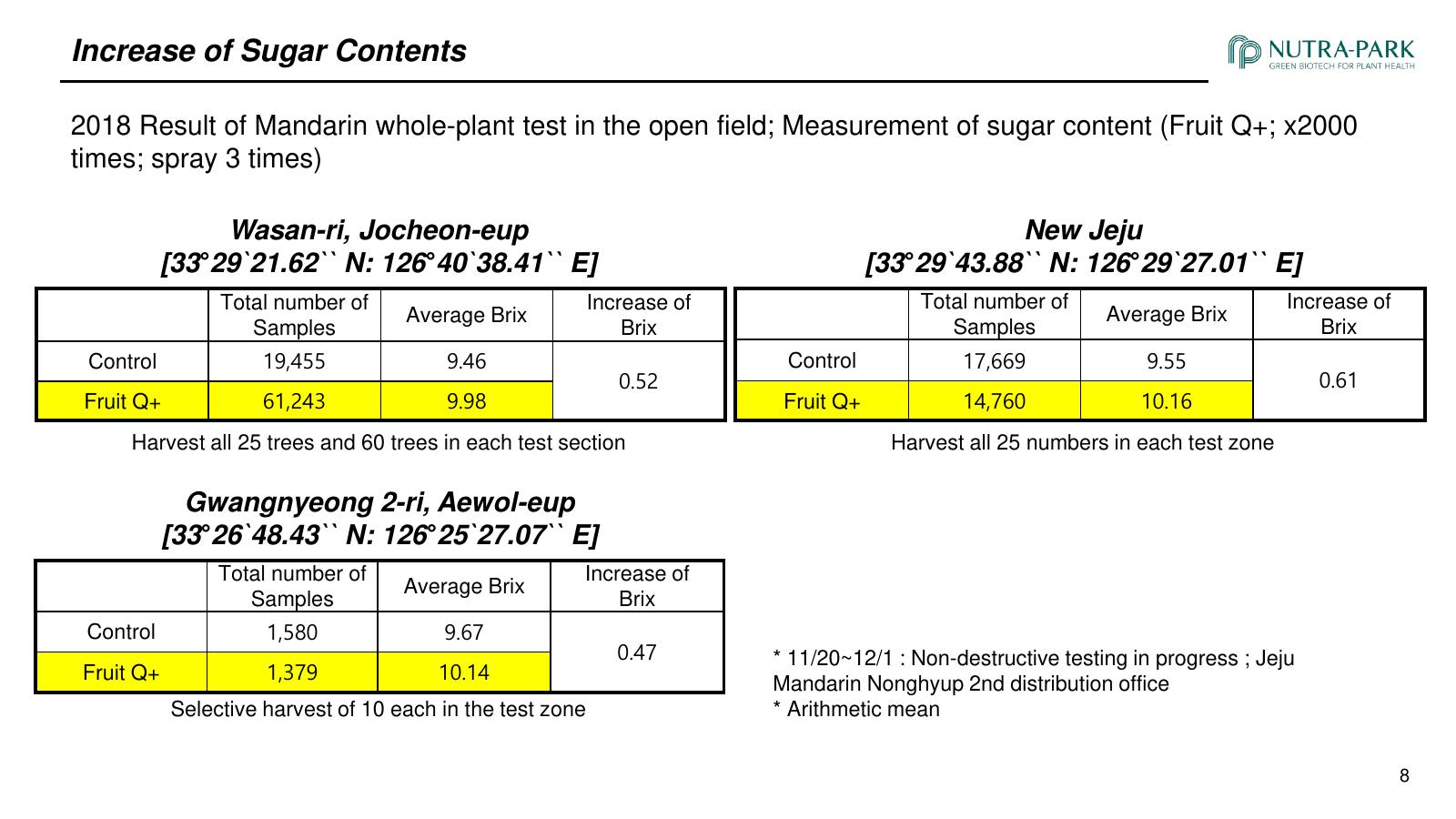
Historical protocol shown in the source: FruitQ+ 2,000×, sprayed 3 times. Sample counts vary by site and were substantially larger than a small plot demonstration.
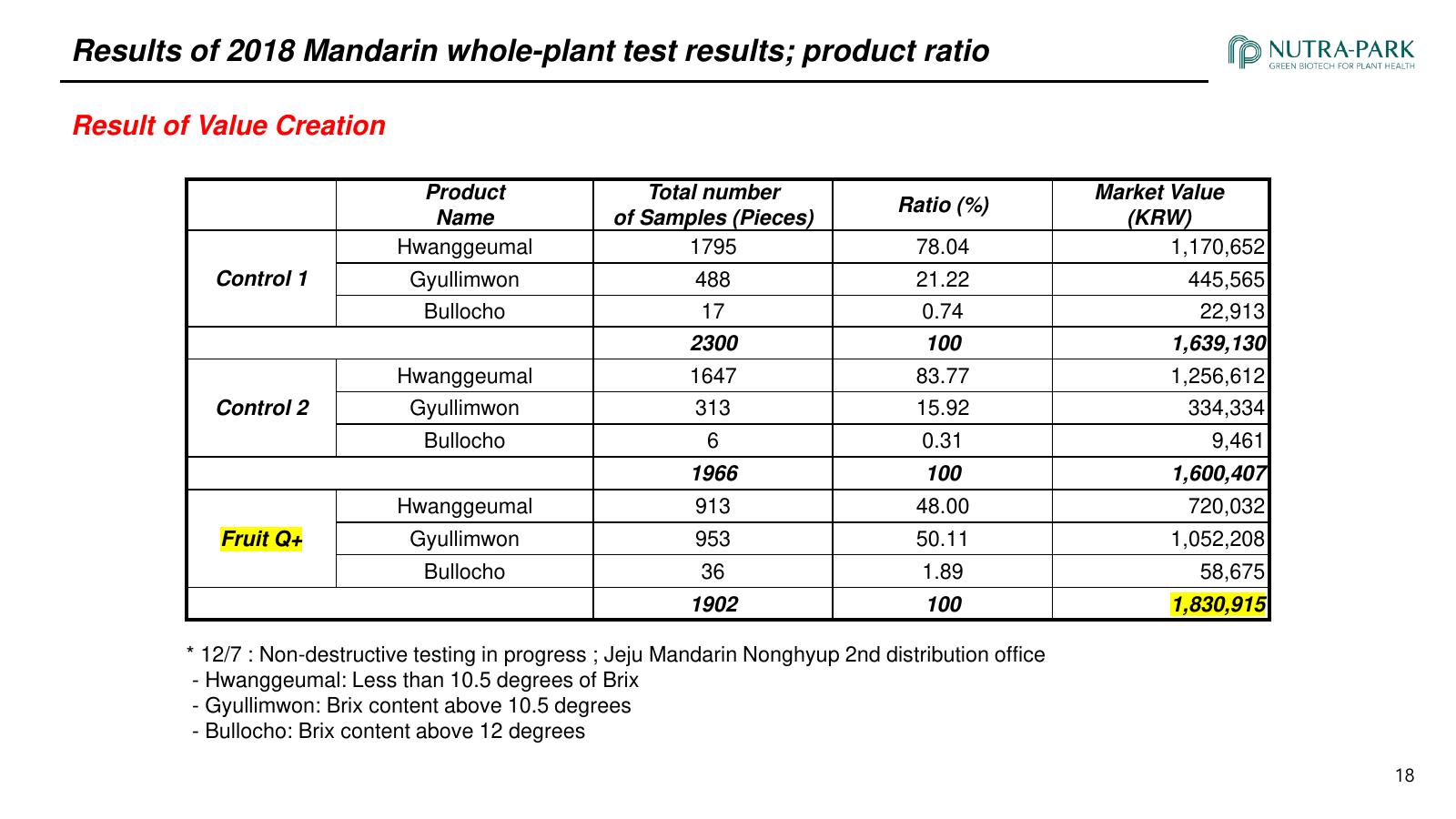
The Jeju record also classified fruit by sugar-content grade and calculated market value. This is useful because it connects a physiological quality response with packout and commercial value rather than relying on a single average number.
Current guide kept separate: the later Orange/Mandarin Fact Sheet lists 4 and 2 weeks before harvest, 2 applications, 250 ml/100 L. The historical Jeju protocol is not silently converted into the current recommendation.
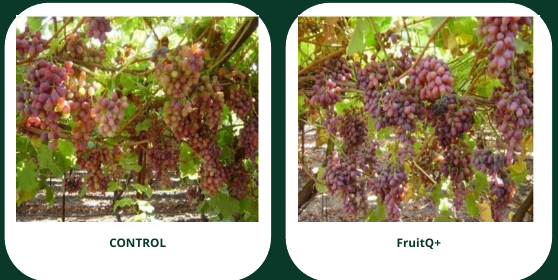
2025 Egypt records document FruitQ+ use in commercial grape farms on Starlight and Early Flame. These photographs are shown as field-experience records, not as controlled FruitQ+-only efficacy trials, because the documented programs included Ethril treatment before FruitQ+ application.
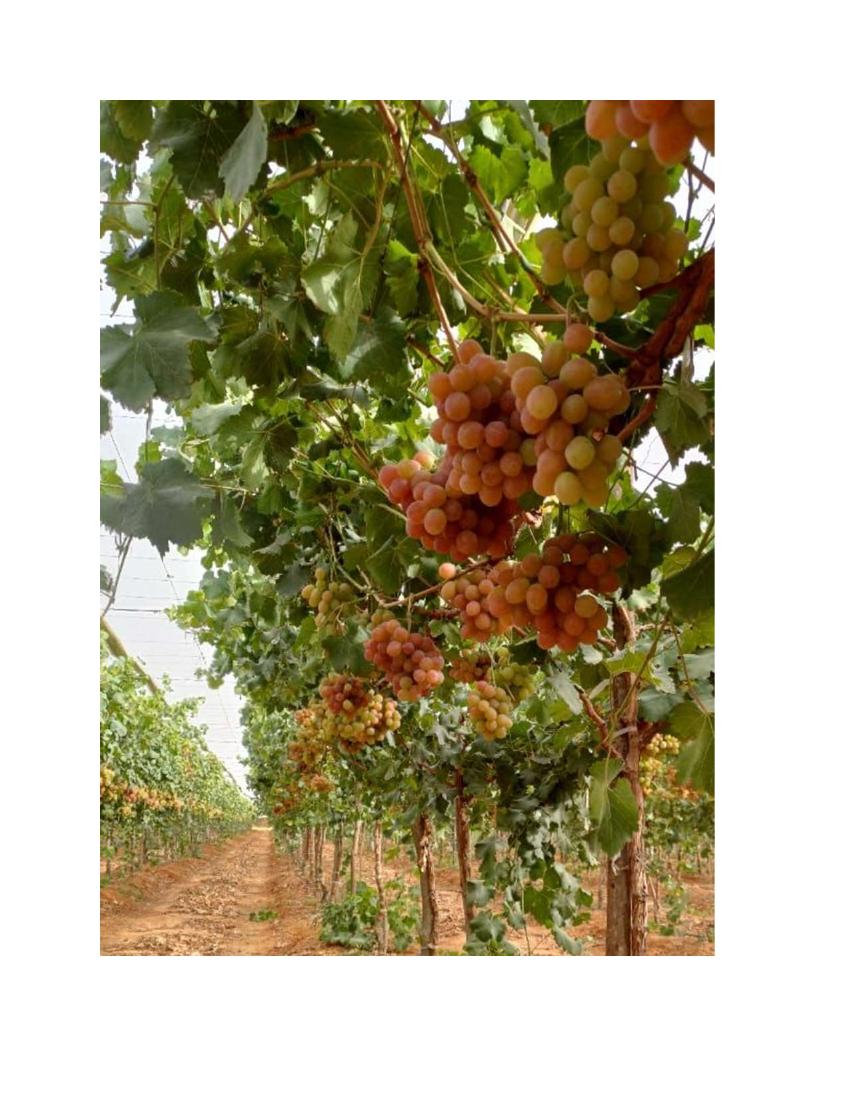
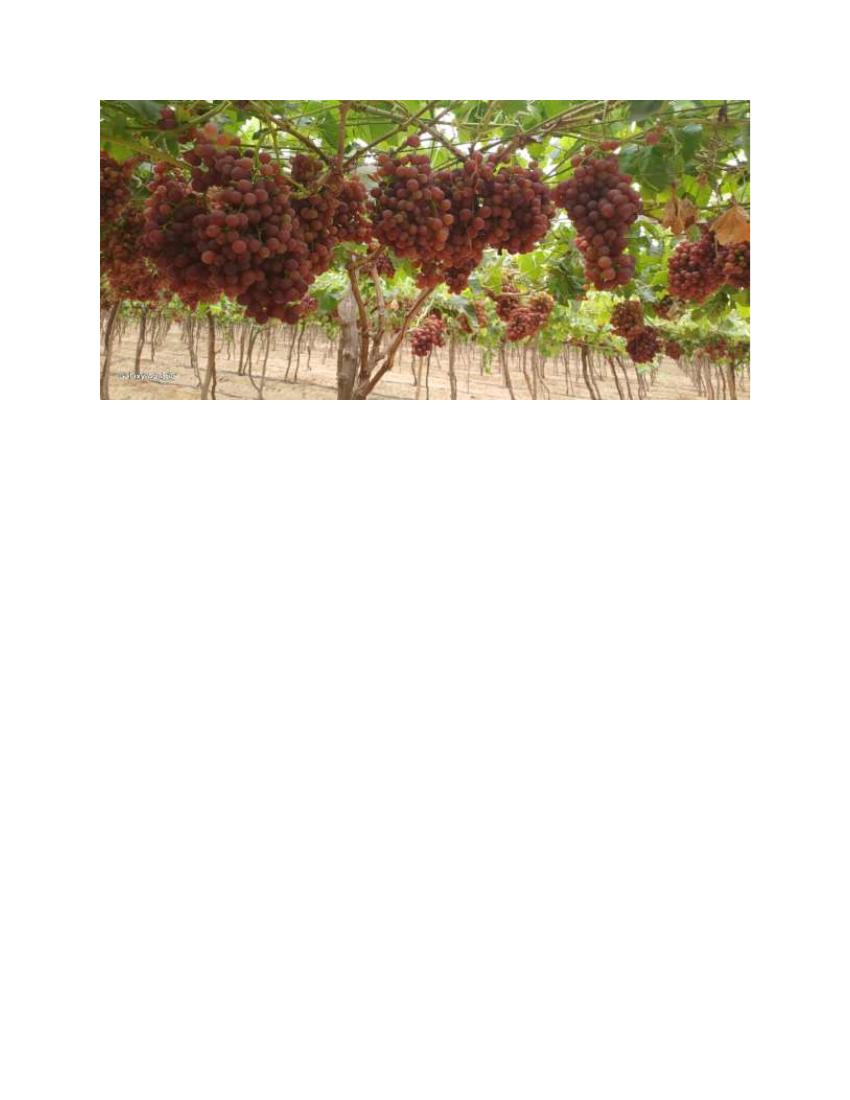
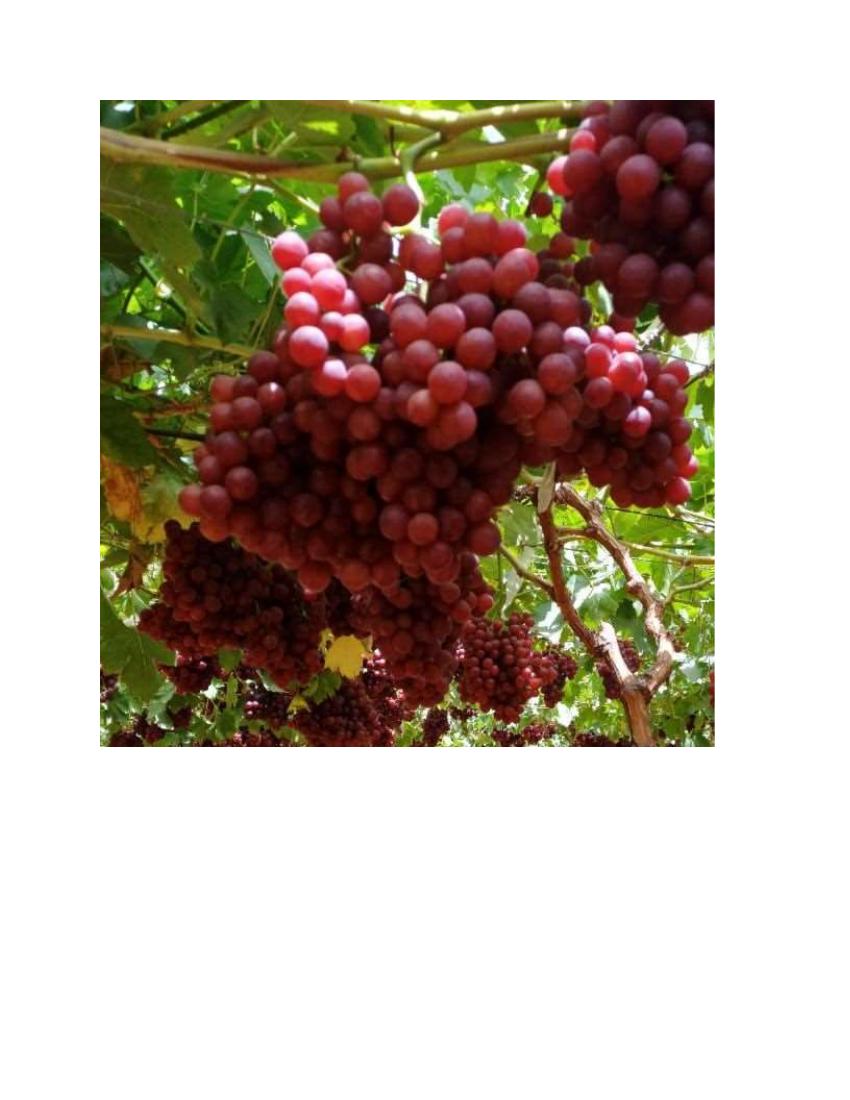
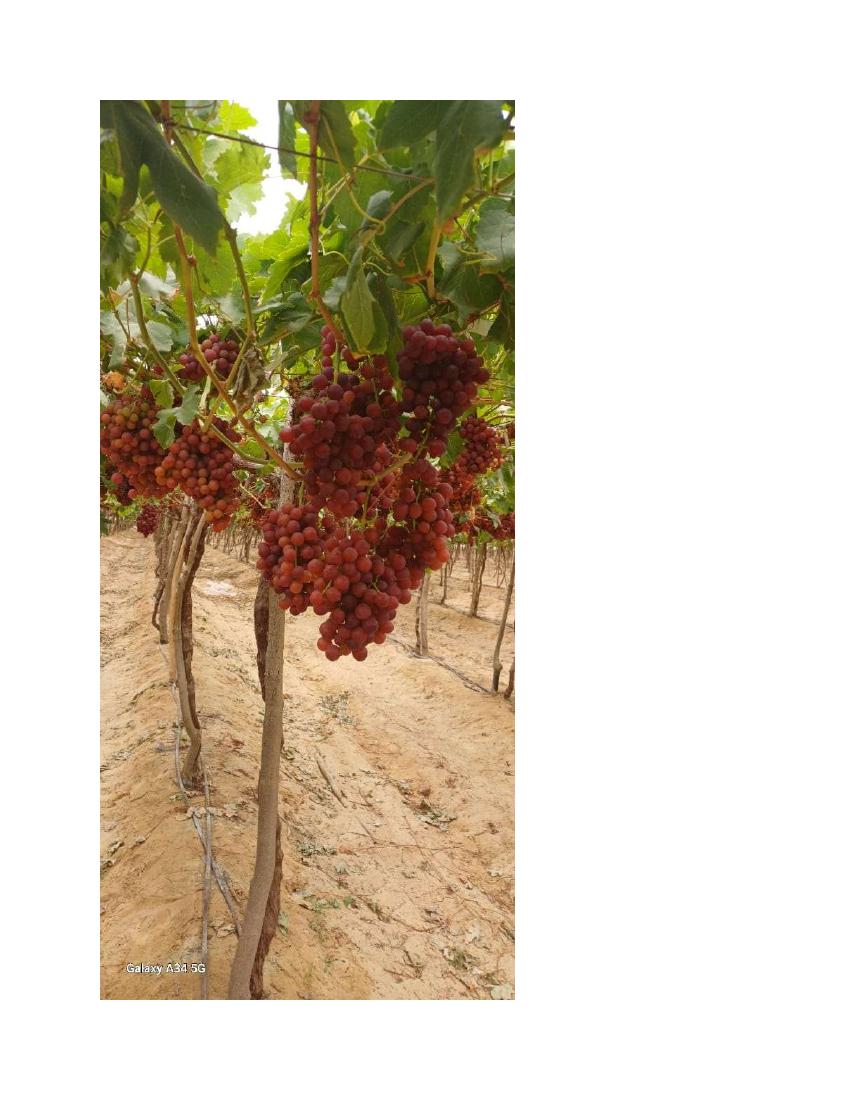
Field-experience records are intentionally distinguished from controlled comparative trials. Full source reports remain part of the technical archive.
Beyond the representative trials shown above, Nutra-Park has accumulated additional FruitQ+ and LPE field and technical records across crops and production regions. Selected source graphs are shown here as supporting evidence; detailed protocols and original source documents are organized in the Science Library.
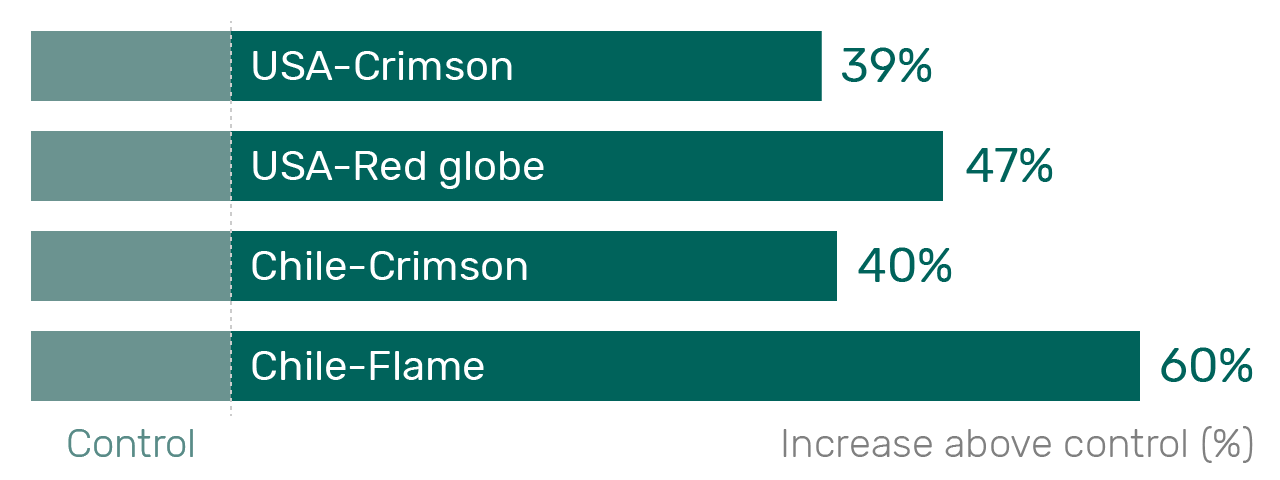
Multi-variety source data from earlier Nutra-Park technical records. Full trial context is retained with the source material.
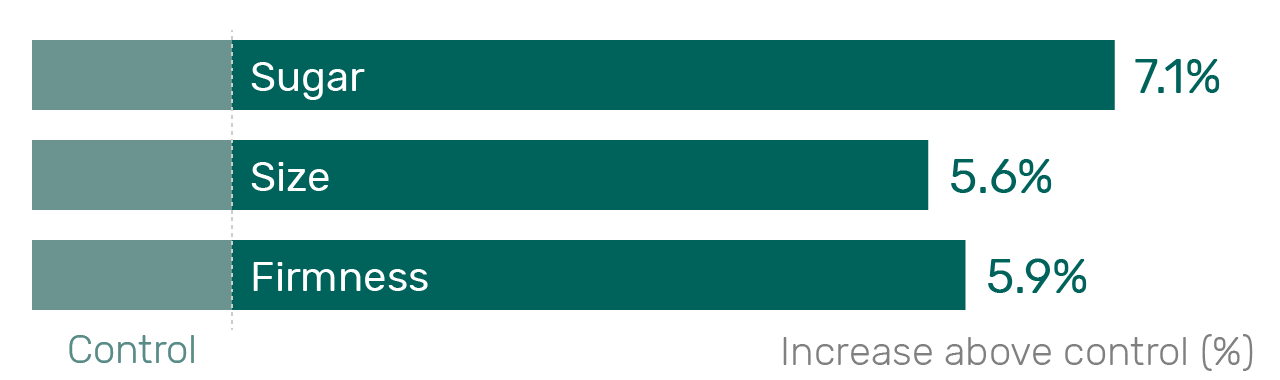
Earlier technical data covering sugar, size and firmness responses. See the source record for protocol details.
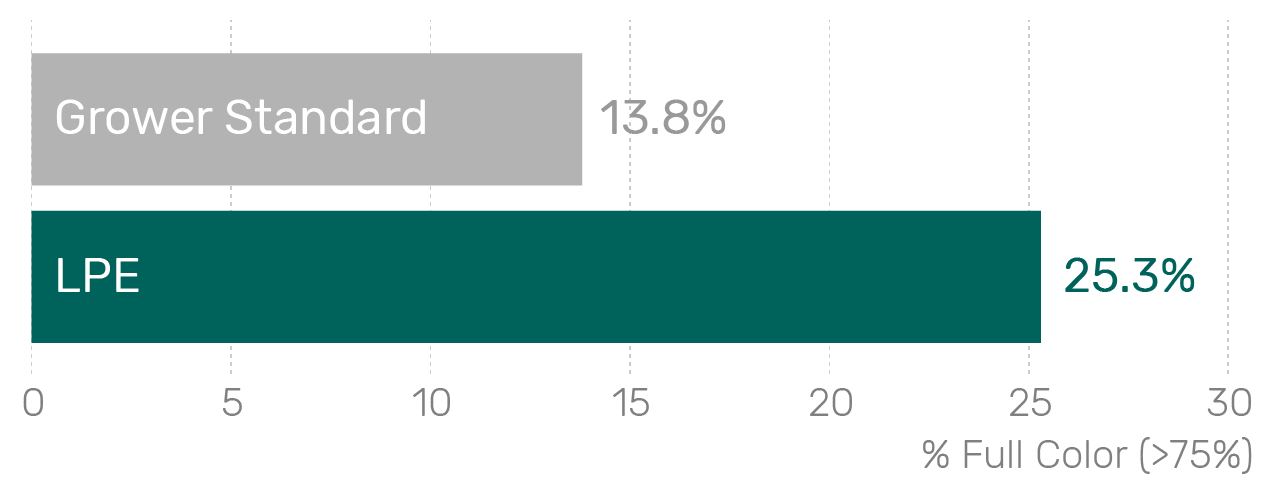
Earlier coloration comparison from the FruitQ+ technical archive. Presented as source evidence rather than a current application recommendation.
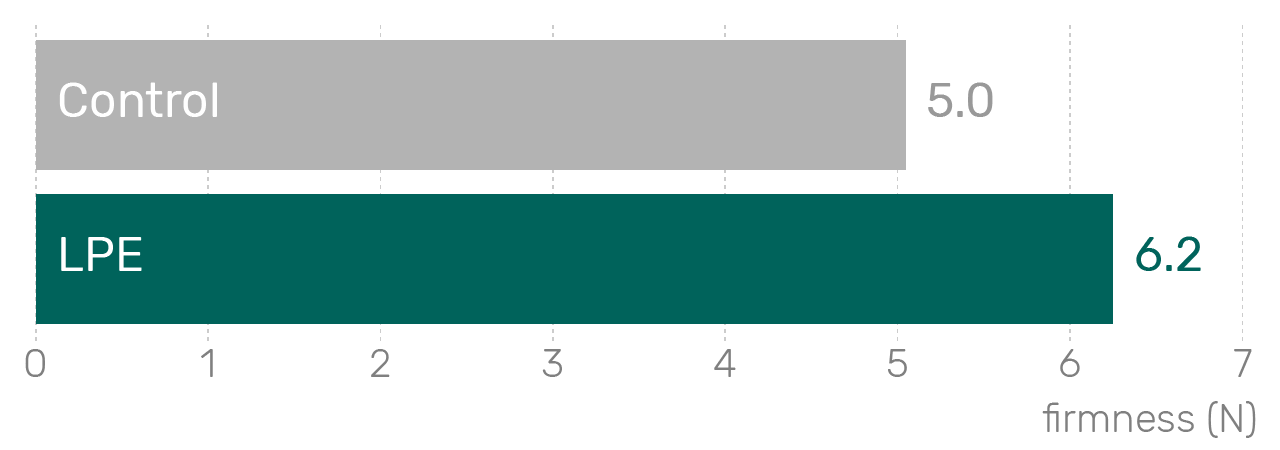
Earlier technical evidence on firmness response, with original context preserved in the source archive.
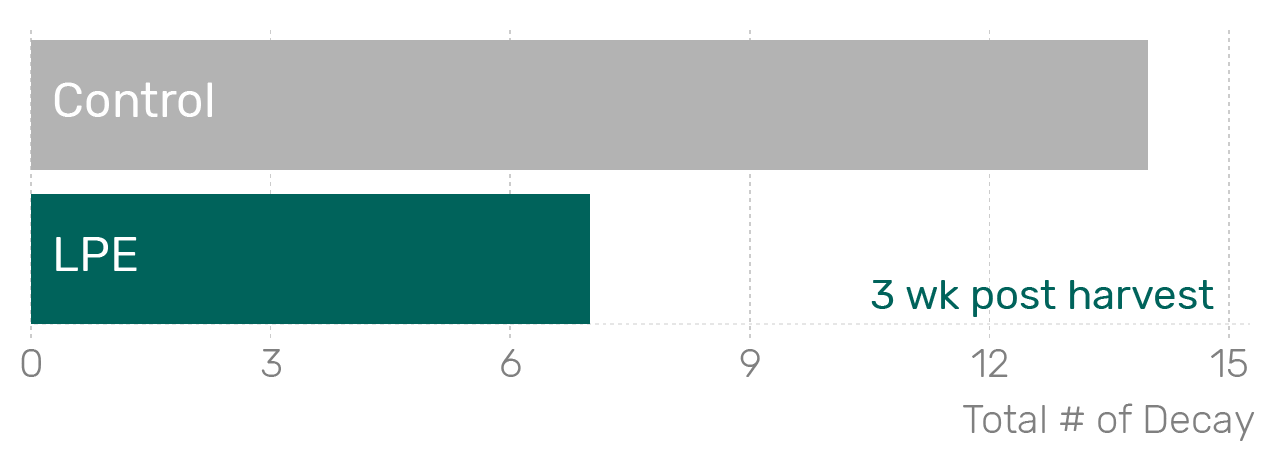
Earlier post-harvest quality data from Nutra-Park technical materials.
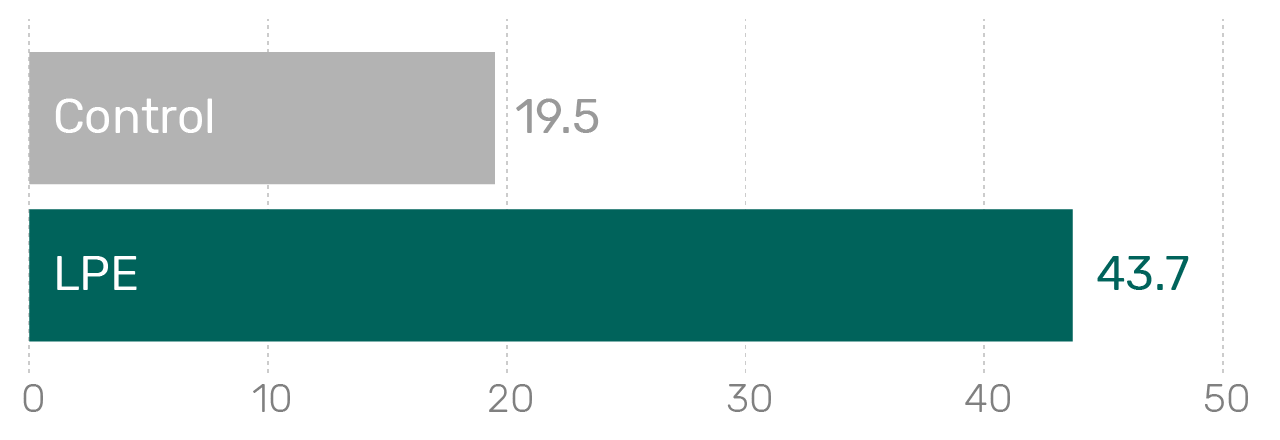
Earlier marketability and shelf-life evidence retained in the FruitQ+ technical knowledge base.
The source library also contains crop-specific FruitQ+ fact sheets and technical records for cherry, apple, grape, tomato, pepper and citrus. These include growth-stage diagrams, control-versus-treatment photographs, quality measurements and historical application protocols.
Historical records cover color, size, firmness, cracking and A-grade fruit. Older sheets include both one- and two-application programs, so protocol details are retained as historical evidence rather than silently harmonized.
Records include coloration, first-harvest marketable yield, firmness and packout, together with 4- and 2-week pre-harvest timing programs.
Earlier materials include color, °Brix, berry size, firmness and marketable-yield records across multiple varieties and regions.
Historical work covers breaker-stage timing, uniform ripening, early marketable yield, weight and firmness.
Technical records include yield observations and a chilling-injury storage test comparing untreated fruit with FruitQ+ treatments.
Valencia and Navel records include fruit weight, size, juice volume, color, sugar-related timing and oleocellosis / storability observations.
Earlier guides consistently use king-fruit blush as the practical start cue and repeated applications at 10–15 day intervals, while concentration differs among historical sheets.
Historical application guides also include peach/nectarine and additional crops. These will remain searchable in the technical archive as source records are indexed.
These source graphs document earlier FruitQ+/LPE work. Trial protocols may differ from current crop recommendations; current application guidance is maintained separately.
FruitQ+ can be explored at different levels — from grower-facing application guidance to research papers, technical notes, patents and historical field records.
Peer-reviewed and technical research related to LPE physiology and post-harvest quality.
FruitQ+ Brochure · PDF →Country, crop, variety, protocol and measured outcome.
Huzhou Strawberry · PPTX →Growth-stage-based programs separated from historical trial protocols.
Application Guide →Earlier brochures, presentations, source graphs and technical records organized for deeper review.
Open Resources →